Match Centre
T20 · Final
 PZ
PZ
 HK
HK
Peshawar Zalmi won by 5 wickets (with 28 balls remaining)
T20 · Eliminator 2
 ISU
HK
ISU
HK
Hyderabad Kingsmen won by 2 runs
T20 · Eliminator 1
 MS
HK
MS
HK
Hyderabad Kingsmen won by 8 wickets (with 28 balls remaining)
T20 · Qualifier 1
PZ
ISU
Peshawar Zalmi won by 70 runs
T20 · 40th Match
ISU
MS
Islamabad United won by 4 wickets (with 8 balls remaining)
T20 · 39th Match
HK
 RW
RW
Hyderabad Kingsmen won by 108 runs
T20 · 38th Match
 LQ
PZ
LQ
PZ
Lahore Qalandars won by 6 wickets (with 3 balls remaining)
T20 · 37th Match
 QG
QG
 KRK
KRK
Karachi Kings won by 9 wickets (with 9 balls remaining)
Latest Cricket News
 Uncategorized
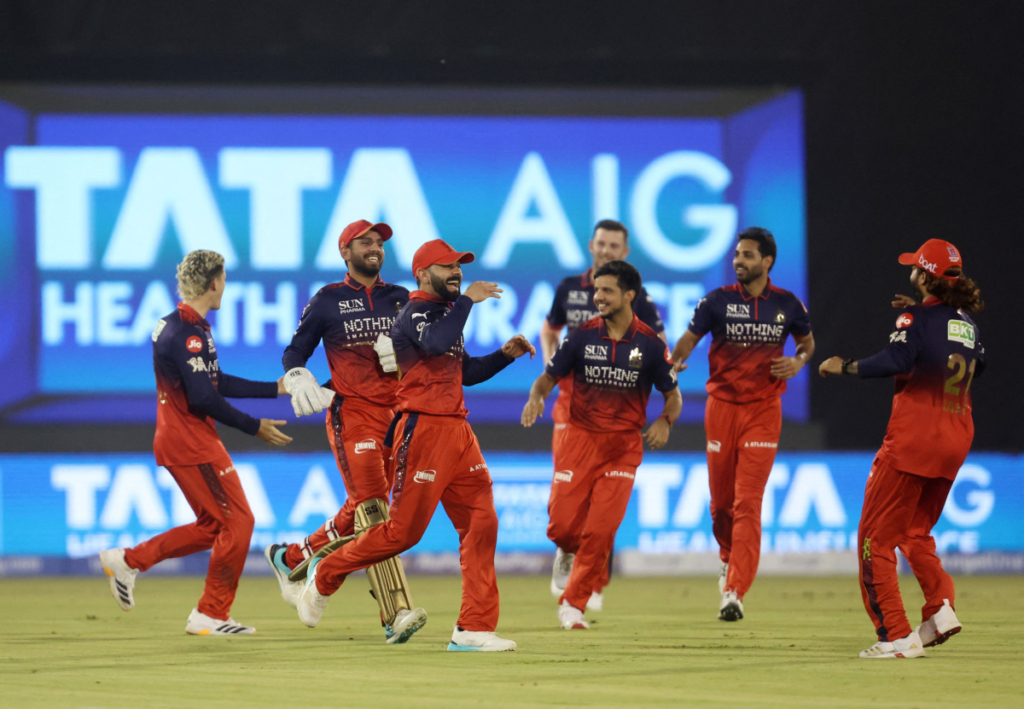
RCB hold nerve as MI crash out of IPL 2026
Royal Challengers Bengaluru beat Mumbai Indians in a dramatic IPL match in Raipur that went right down to the final ball, with both teams fighting hard on a tricky, two paced pitch.
 Daniel Gallan
Test
The ICC World Test Championship (WTC) resumes this week with South Africa well placed in the early stages of their title defence. However, Temba Bavuma & Co face potentially defining series against Australia and England. The Proteas sit third on...
 IPL
IPL
Markram tasked with steadying Lucknow chase
Aiden Markram carries Lucknow’s hopes as they face Royal Challengers Bengaluru, with the visitors needing a stronger batting return on a high-scoring surface.
Points Table
| # | Team | P | W | L | Pts | Form |
|---|---|---|---|---|---|---|
| 1 |
|
7 | 6 | 0 | 13 |
W
W
W
W
W
|
| 2 |
|
7 | 4 | 2 | 9 |
W
W
W
L
W
|
| 2 |
|
7 | 5 | 2 | 10 |
L
W
W
L
W
|
| 4 |
|
7 | 3 | 4 | 6 |
L
L
W
W
W
|
| 4 |
|
8 | 3 | 5 | 6 |
L
W
L
W
L
|
| 5 |
|
6 | 3 | 3 | 6 |
W
W
L
L
L
|
Top 4 qualify for next round
Teams
The Pakistan Super League is one of the most important competitions in modern T20 cricket – not because it is the richest, but because it produces cricketers who can win matches anywhere in the world.
Since its launch in 2016, the PSL has grown into a league defined by intensity, fast bowling depth and competitive balance. It has become a proving ground for players, a platform for emerging talent and a tournament that carries real cricket credibility in a franchise era often dominated by commercial noise.
If the IPL is the financial centre of T20 cricket, then the PSL is one of its most reliable production lines.
What is the Pakistan Super League?
The Pakistan Super League is Pakistan’s premier franchise-based T20 competition, organised by the Pakistan Cricket Board.
The league features city-based franchises made up of Pakistani domestic players and overseas professionals. It operates within the global T20 ecosystem but retains a distinctly Pakistani cricket identity — fast, aggressive and often unpredictable.
Unlike some leagues that lean heavily into entertainment, the PSL’s reputation has been built primarily on the quality of its cricket.
PSL teams
The PSL has expanded over time and currently features eight teams:
- Karachi Kings
- Lahore Qalandars
- Islamabad United
- Peshawar Zalmi
- Quetta Gladiators
- Multan Sultans
- Hyderabad Kingsmen
- Rawalpindiz
The original six teams formed the foundation of the league, with expansion adding depth and commercial scale.
Each franchise represents a major cricketing region, which helps maintain strong local support and rivalry-driven fixtures.
History of the PSL
The PSL was launched in 2016 at a time when Pakistan cricket needed a strong domestic franchise competition.
Early editions of the tournament were played in the UAE due to security concerns, but the league gradually returned to Pakistan, which proved critical to its long-term success.
That shift back to home venues transformed the PSL:
- Stronger crowd engagement
- Greater national connection
- Increased commercial value
The competition has grown steadily, reaching its 11th edition in 2026, with an expanded schedule and increased team participation.
How the PSL format works
The PSL follows a structure that balances consistency and knockout pressure.
League stage
Teams play a round-robin format, earning points for wins and building a standings table.
Playoffs
The top teams qualify for a playoff system that includes:
- Qualifier
- Eliminator matches
- Final
This format rewards teams that perform consistently across the season while still allowing momentum teams to surge late.
What defines PSL cricket
The PSL has a clear identity – and that is one of its greatest strengths.
- Fast bowling dominance
Pakistan continues to produce elite fast bowlers, and the PSL showcases that depth better than any league. - Competitive balance
Unlike some leagues dominated by a few franchises, the PSL tends to produce tighter contests. - Pressure cricket
Matches are often decided in final overs, with tactical decisions playing a major role. - Emerging talent
Young players regularly use the PSL as a springboard into international cricket.
South African players in the PSL
South African cricketers have been consistent contributors to the PSL, particularly in key roles.
Notable profiles include:
Rilee Rossouw – explosive middle-order batting
David Miller – finishing ability
Imran Tahir – Specialist spinner
South Africans are typically valued for:
Power hitting
Death bowling
Tactical awareness
PSL records and milestones
The PSL has developed a strong statistical identity, with records that reflect its competitive nature.
Batting
Leading run scorers have typically combined consistency with strike rate
Match-winning innings often come under pressure rather than in flat-track scenarios
Bowling
Fast bowlers dominate wicket charts
Strike rates tend to be lower than in batting-heavy leagues
Team success
Islamabad United and Lahore Qalandars have been among the most successful franchises historically
(All stats should be verified via official PSL or ESPN Cricinfo before publishing updates.)
PSL vs other T20 leagues
The PSL occupies a distinct space in the global T20 ecosystem.
Compared to the IPL
Less financial power
More emphasis on cricket quality
Compared to SA20
Stronger historical depth
More established talent pipeline
Compared to the BBL
Less entertainment-driven
More cricket-focused
This differentiation is important. The PSL does not try to be everything — it leans into what it does best.
Betting and digital relevance
The PSL is a strong betting product because of its unpredictability and player depth.
Popular markets include:
Match winner
Top batsman
Top bowler
Total runs
The league’s competitive balance makes it particularly attractive for:
Value betting
Live betting swings
Why the PSL matters
The PSL matters for three key reasons:
- Talent production
It consistently produces international-level players. - Cricket credibility
Matches are competitive and tactically rich. - Global relevance
It remains one of the core T20 leagues outside India.